
We designed the garden twice—once in each direction
The garden improved when we stopped designing one impressive view and asked what it would feel like to sit inside the new room and look back.
The view we had forgotten
We had spent all our energy looking down the garden at the proposed room.
It made sense. That was the big new thing. It was also the thing AI was best at making look spectacular, especially after dark when warm lights can hide a multitude of unanswered questions.
Then I imagined sitting on the new sofa.
The television would be behind us. The timber walls would be around us. Most of the evening, we would actually be looking back towards the house—and we had barely designed that view at all.
So we gave AI a new job: turn around.
One garden, two hero shots
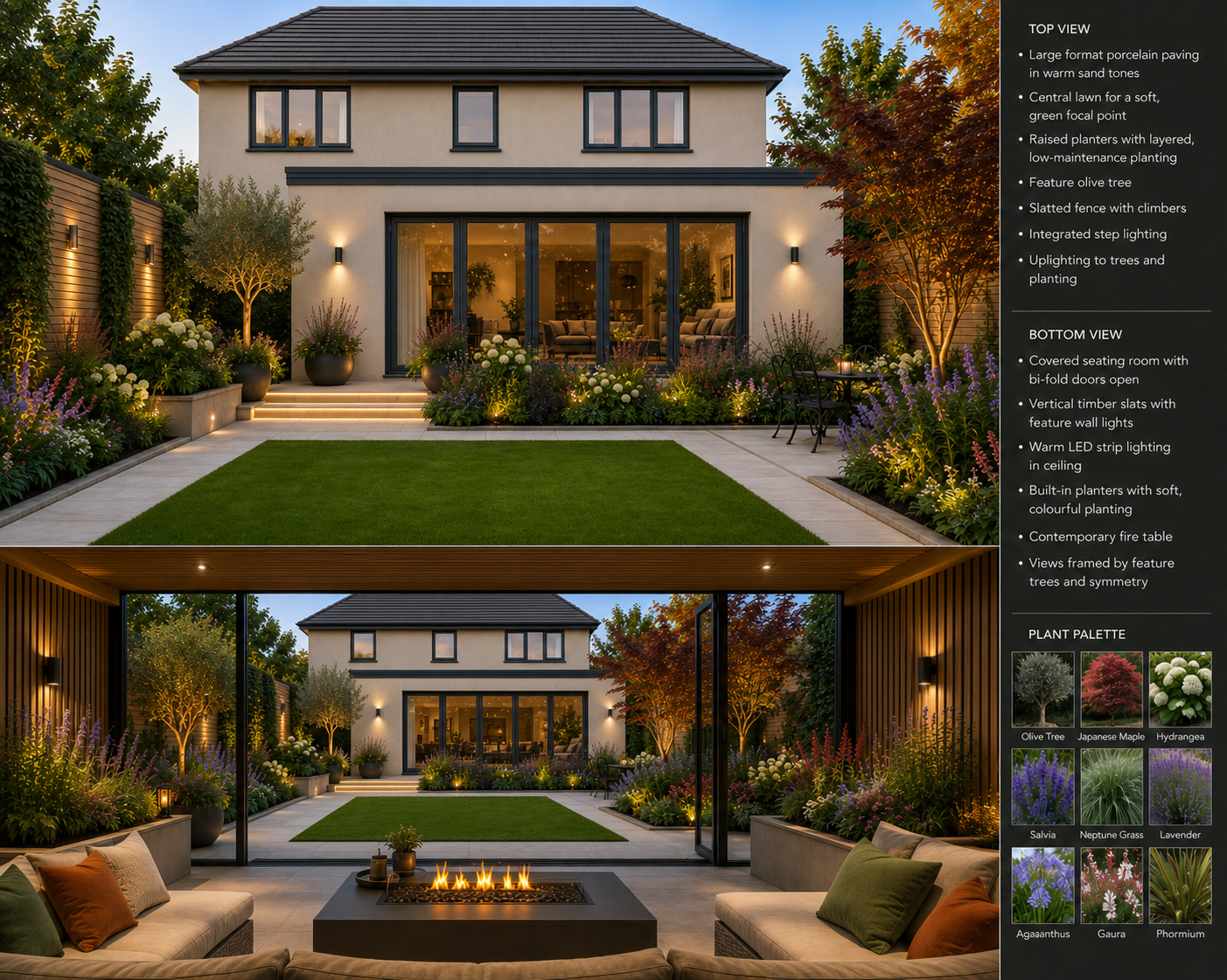
We asked for plenty of colourful, low-maintenance planting and flooring that felt wonderful rather than apologetic. The resulting board showed the garden in both directions.
Looking from the house, the room became the destination at the far end. Looking back from the room, the lawn became a calm green centre, with pale porcelain and deep planting leading the eye home again.
That second image changed how we thought about the whole scheme. The room could not just be an attractive object bolted onto the garage. It had to frame the rest of the garden when we were inside it.
It also made the planting do more useful work. Instead of a few interesting plants dotted around, the beds became broad layers of colour and texture. The image suggested hydrangeas, salvia, lavender, ornamental grasses and small feature trees.
AI, naturally, put nearly everything in flower at once. Apparently our future garden has negotiated its own climate.
What we decided
From that point on, every serious concept had to pass a two-direction test:
- Does the room look inviting from the house?
- Does the house end of the garden look inviting from the room?
- Does the route between them feel like part of one place?
- Is there something worth seeing in daylight as well as under flattering evening lights?
The lawn, pale paving, repeated warm timber and deep planting started to become the common language tying both ends together.
The reality check
The board shown here is a privacy-safe AI concept. We deliberately anonymised the house and removed real access and security cues before publishing it.
It is not a record of the building, boundaries or levels. Nor is the plant strip at the side a shopping list. Before any planting scheme becomes real, we still need to understand sun, shade, soil, drainage, mature sizes and how much gardening we honestly want to do on a wet Sunday in November.
But the viewpoint rule survived—and later became one of the most useful parts of the masterplan brief.
Behind this outcome
Design your garden from every seat
Planned for the Space: our multi-view prompt method, viewpoint checklist and consistency checks for comparing AI garden concepts.