
‘Helen’s Gone Potty’ gave our awkward shady corner a reason to exist
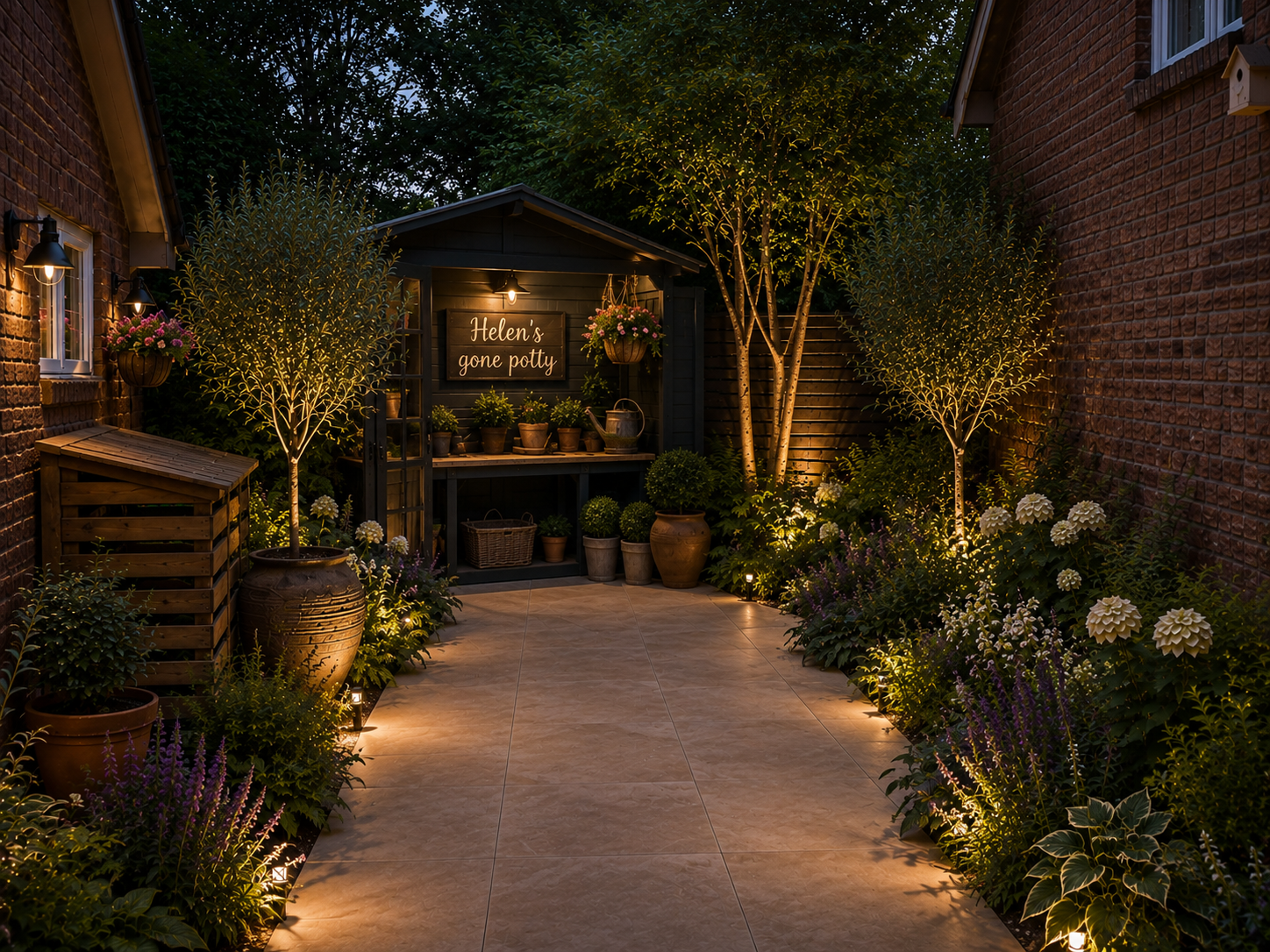
A sunless, overlooked strip stopped pretending to be another seating area and became a planted route to a small potting shed with a deliberately daft name.
The corner nobody wanted to sit in
Every garden seems to have one bit that politely refuses to become anything.
Ours was a shaded strip beside a wall we do not own. It did not get much sun. The neighbours often had a window open, so we did not especially want to sit there and share every conversation. We disliked the flooring, did not want gravel and could not attach lights or redesign somebody else's wall.
The AI kept doing what AI does when faced with an unloved garden corner: it added a chair.
Then a path.
Then some lights on the wrong wall.
I asked the perfectly reasonable question:
What’s the point of having a path to nowhere?
That turned out to be the key. The space did not need decoration. It needed a destination.
Helen went potty
The idea arrived as a joke and immediately made more sense than the serious suggestions.
What if we added a really elegant potting shed, with a sign saying “Helen’s Gone Potty”?
Suddenly the path had somewhere to go. The shaded corner had a practical job. It could hold pots, tools and the unreasonably large collection of garden things that otherwise migrate towards the garage.
It also gave the area personality without turning it into another entertainment zone. We already had places to sit. We did not need to furnish every square metre as if a coach party might arrive.
The concept we kept
The public image is a privacy-safe interpretation of the direction rather than a reproduction of the recognisable corner.
It keeps the useful ingredients:
- a compact timber potting shed as the focal destination
- a clear pale path that actually leads somewhere
- dense shade-tolerant planting around the route
- a couple of proper pots rather than loose decorative clutter
- warm task and welcome lighting fixed to our own structure
- no seating, gravel or changes to the neighbouring wall
The joke on the sign matters more than it probably should. It stops the shed feeling like a purely practical box and makes the corner feel like ours.
What still has to argue back
We have not measured the available footprint or decided which wall the shed could safely and legally sit against. We still need to verify ownership, access, drainage, base requirements, electrical work and whether a shed of the useful size needs any permission or special treatment.
The planting is also a mood, not a shopping list. Shade changes through the year, and we have not checked the soil, moisture, mature sizes or maintenance properly.
But the purpose is now clear, which is the bit we were missing.
Instead of asking, “How do we make this awkward corner pretty?”, we can ask a much better question: “What is the smallest practical potting garden that makes this route worth taking?”
Behind this outcome
Give an awkward garden corner one useful job
Planned for the Space: our constraint-to-purpose exercise, awkward-space brief, shade-and-privacy checklist and concept comparison method.